


“In the future office managers will be more crucial, not only in ensuring that the office environment functions smoothly but also in bridging the gap between hybrid work dynamics. Their role will evolve into that of a strategic partner, collaborating closely with teams to create spaces that foster productivity, collaboration, and wellbeing.”
Patrycja Pachowska | Global Workplace Manager | Docplanner
Office management evolved from basic administrative tasks to orchestrating complex workplace ecosystems that support hybrid teams, optimize resources, and help with improving the employee experiences.
Modern office managers are the operational backbone of organizations, responsible for everything from space utilization to vendor relationships, employee services to facility maintenance.
The rise of office management software transformed how office managers approach their responsibilities, by helping them automate routine tasks, and enabling their strategic decision-making.
However, with hundreds of specialized platforms available, choosing the right technology stack can be overwhelming.
This is why we are exploring here the essential office management SaaS categories that empower office managers to operate more efficiently and strategically:
- Workplace and space management platforms
- Access control systems
- Space analytics and optimization software
- Procurement and vendor management tools
- Employee engagement solutions
Let’s start!
Workplace and space management platforms
The foundation of modern office management lies in understanding and optimizing physical spaces. This is becoming even more important when organizations navigate hybrid work models.
According to JLL, the global office utilization rate in 2025 is 54%. This means lost money. Workplace management software is here to help and provide analytics data that can inform managers on how to better use the office and car park spaces.
- Desk booking systems are essential for managing hybrid flexible workspaces where there are fewer desks than employees and employee attendance is unpredictable.
Such hot desking apps allow employees to book a desk in advance, have visitor management options, and provide utilization analytics. The data is helping office admins better understand how the office is being used, so that they can better organize space or even decide whether there’s opportunity for downsizing. Tidaro, Robin, Deskbird, or Envoy are such tools.
- Room booking systems appeared because the cost of underutilized spaces is an important one, and this cost can be decreased by making effective use of meeting spaces.
Such meeting rooms apps eliminate ghost bookings, double-bookings, as well as spreadsheet bookings. Usually, the tools that offer desk booking options also have a meeting room scheduling module as well. This is the case of the apps I mentioned above: Tidaro, Robin, Deskbird, and Envoy.
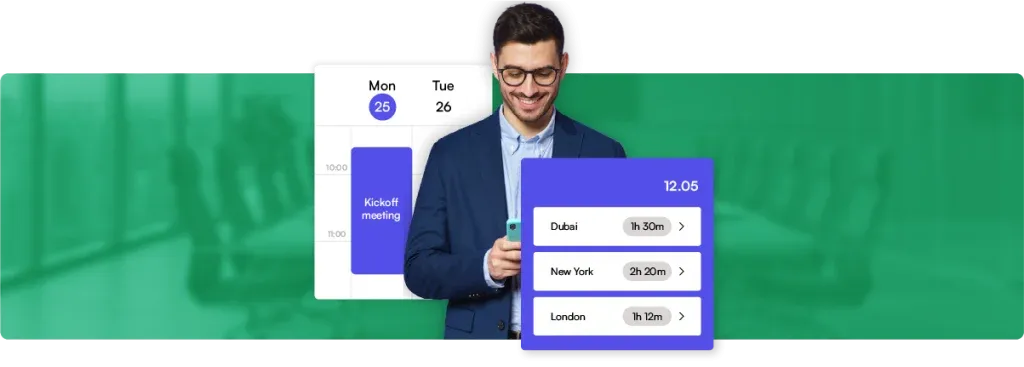
- Parking spot booking systems allow office admins to better manage their scarce parking spaces. Tools such as Tidaro or Wayleadr help businesses increase their car park availability by up to 30%.
How so? Well, let me give you an example. The most common parking policy is the assigned one. This means that often times, when the owners of the assign spots are missing from the office (due to sick days, vacations, business meetings, etc.) these spaces would stay empty. A spots booking app would allow them to be shared, ensuring an optimized usage pf the car park’s capacity.
Access control systems
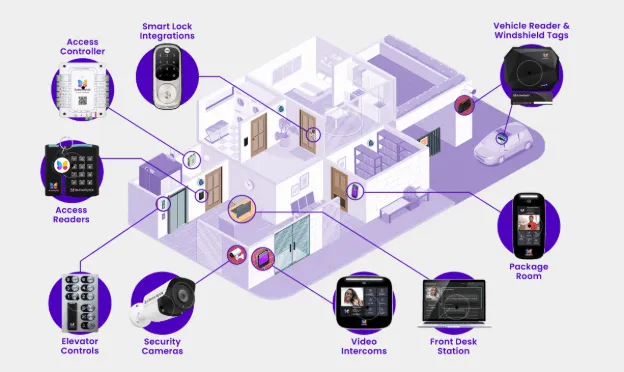
Such software can manage physical access to buildings and rooms. The most popular access control systems for businesses are Role-Based Access Control (RBAC), Keypad Readers, Swipe Card Readers, RFID Door Readers, Biometric Readers, and cloud-based systems.
Kisi** **provides cloud-based access management with real-time monitoring and Brivo offers scalable access control with visitor management integration.
ButterflyMX is a cloud-based property access control and video intercom system that enables smartphone-based building entry and management. It is one of the most popular access control vendors out there, providing a secure, convenient, and affordable way to manage and grant property access, serving over 10,000+ multifamily, commercial, gated community, and student housing properties.
Space analytics and optimization software
Desk, rooms, and parking spot booking systems have analytics reports that can help office admins understand workplace resource usage. For those that want to dig deeper into office analytics, tools such as Density or VergeSense can really make a difference.
These tools help office managers make data-driven decisions about real estate. Density offers people counting and occupancy measurement using sensors, while VergeSense provides computer vision-based space utilization analytics. Locatee is an analytics that helps optimize space allocation and find underutilized areas, while Butlr uses thermal sensing for privacy-preserving occupancy data.
Microsoft Workplace Analytics analyzes email and calendar patterns to understand collaboration trends. Worklytics provides privacy-first workplace analytics to optimize team productivity and space utilization.
Procurement and vendor management tools
Office managers typically oversee significant purchasing budgets and maintain relationships with dozens of vendors. SaaS procurement platforms bring efficiency and oversight to these processes.
Procurify, for example, is a user-friendly procurement and vendor management platform designed for growing businesses. It offers purchase order management, vendor onboarding, and spend analytics.
Coupa offers comprehensive spend management with guided buying experiences and contract management. Ariba connects organizations with suppliers while managing procurement processes.
Vendorful provides vendor onboarding and performance management, while Suppliergateway offers comprehensive supplier relationship management.
Contract management systems help organize and track vendor agreements. DocuSign CLM provides contract lifecycle management with electronic signature integration. ContractWorks offers simple contract storage and management with automated renewals and compliance tracking.
Employee engagement solutions
Office managers play a crucial role in facilitating communication and supporting a positive workplace culture, especially in hybrid environments where in-person interactions are limited.
Employee survey and feedback platforms help gauge employee satisfaction and gather operational feedback. Culture Amp provides employee engagement surveys with analytics and benchmarking. 15Five is a platform that monitors performance, engagement, and retention. Officevibe offers pulse surveys and team insights with actionable recommendations.
Event management platforms streamline planning and coordination of company events. Cvent offers comprehensive event management with venue sourcing and attendee engagement features.
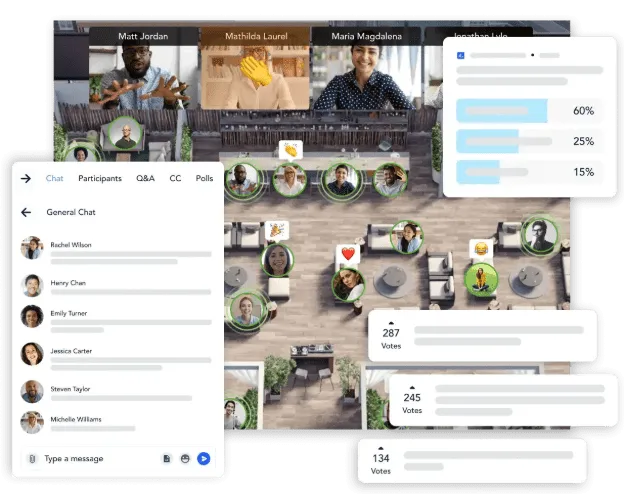
Virtual office spaces attempt to recreate the serendipitous interactions of physical offices. Gather creates 2D virtual spaces where employees can move around and engage in spontaneous conversations. Kumospace provides video-based virtual offices with spatial audio, while Remo offers virtual event spaces. Spatial focuses on 3D collaboration environments for more immersive experiences.
Office management software: implementation best practices
Successfully implementing SaaS tools requires careful planning and change management. Office managers should consider the following approach:
- Assessment and planning begin with evaluating current processes and identifying pain points. Conduct employee surveys to understand workflow challenges and gather requirements from different departments. Map existing vendor relationships and technology investments to avoid redundant solutions.
- Pilot programs allow testing of new platforms with small groups before organization-wide rollouts. Start with one or two high-impact areas and measure results before expanding. This approach reduces risk and provides proof of concept for broader adoption.
- Integration strategy should prioritize platforms that work well together. Consider choosing tools from the same vendor ecosystem (like Microsoft 365 or Google Workspace) or platforms with strong API connectivity. This reduces training complexity and improves data consistency.
- Office managers should identify champions within each department who can provide peer support during transitions.
According to Michał Zawada, from Fresh Office, the person behind the conference series “Office Manager”, there are several critical factors when evaluating potential vendors:
- Alignment with requirements comes first. Many vendors present standardized packages that may not address your specific needs, making it essential to articulate your expectations clearly and ensure the provider can deliver accordingly.
- Adaptability plays a vital role in successful partnerships. Look for providers who demonstrate flexibility across service offerings, project timelines, and contractual arrangements to accommodate your business’s evolving demands.
- Quality of communication often distinguishes excellent providers from adequate ones. Strong rapport with your primary contact can streamline collaboration and decision-making, particularly when multiple vendors offer comparable services.
- Track record verification provides crucial insight into reliability. Research the provider’s industry experience, client testimonials, and case studies to gauge their ability to deliver consistent results and support long-term partnerships.
Future trends and considerations
The SaaS landscape for office management continues to evolve rapidly, driven by changing work patterns and advancing technology capabilities.
Sustainability and ESG reporting are increasingly important as organizations focus on environmental responsibility. Energy management platforms, waste tracking systems, and sustainability reporting tools will become essential components of the office manager’s toolkit.
Enhanced mobile experiences ensure that office management tasks can be handled from anywhere, supporting the mobile-first approach of modern workplace management.
Security-first architecture has become paramount as cyber threats targeting workplace systems intensify. Modern office management platforms are implementing zero-trust security models, end-to-end encryption, and advanced authentication methods as standard features rather than add-ons. Office managers now prioritize vendors that prove robust security certifications, regular penetration testing, and transparent incident response protocols.
With remote work expanding attack surfaces and sensitive employee data flowing through multiple systems, security considerations often outweigh convenience features in platform selection decisions. This shift means office managers must develop greater security literacy and work closely with IT teams to evaluate vendor security postures, data handling practices, and compliance frameworks before implementation.
Conclusion
The role of office managers transformed from administrative support to strategic business operations. SaaS platforms provide the tools necessary to manage complex workplace ecosystems efficiently while delivering measurable value to organizations.
Success lies not in adopting every available tool, but in carefully selecting platforms that integrate well together and align with organizational goals.
Office managers who invest time in understanding their technology options and implementing them strategically will find themselves better positioned to support their organizations’ success in an increasingly dynamic business environment.