

Office Parking Management
How Technology is Solving Many of the Headaches of Office Parking Management
It’s a fact: cars are the dominant mode of transportation from home to work in cities. Traffic jams stretch for miles, the air is thick with pollution, and people start their days already stressed. Next, they get to their workplace and struggle to find a parking spot. At the end of the day, they fight the same traffic jams. This is the reality for many cities around the world, and it’s not sustainable.
Now, in this guide we are going to try and come up with some solutions for managing situations in the parking lots belonging to offices and business campuses.
So, here’s our plan, the guide contains the following chapters:
- Understand how to drive efficiency in the parking lot,
- Design parking lot policies that work,
- Understand which tools can be of use in the management of office parking lots,
- Embracing smart parking,
- Adapting the car park for electric vehicles.
Let’s start by looking at the key aspects of office parking management:
- Real-time occupancy tracking (including data analysis and reporting): Knowing how many spaces are available at any given time helps users find parking quickly and efficiently, reducing congestion and stress. Tracking parking usage patterns helps identify potential issues and opportunities for optimization.
- Reservation systems: Allowing employees or visitors to reserve parking spaces in advance guarantees a spot and reduces the time spent searching for parking.
- Sensor networks: Ultrasonic, infrared, or magnetic sensors installed above or embedded in each parking space detect vehicle presence.
- Access control: Ensuring that only authorized vehicles can enter the parking area enhances security and reduces unauthorized parking.
- Visitor management: Streamlining the process for visitors to find and use parking spots ensures a positive experience for everyone.
- EV charging management
- Car sharing/Carpooling: Encouraging employees to share rides can reduce the overall demand for parking spaces and alleviate congestion.
Let’s dig deeper.
Real-time occupancy tracking in the car park
Office parking management has evolved significantly in workplace environments, with real-time occupancy tracking emerging as a game-changing technology for both facility managers and employees.
Modern parking occupancy tracking has replaced outdated methods like manual counting with intelligent technologies that provide immediate visibility into parking availability:
- Parking spots booking systems: such systems allow admins understand the car park availability and booking patterns, without the need of installing any hardware!
- Sensor networks: Advanced sensors at garage entrances and exits can maintain accurate counts of available spaces, as well as entry and exit counting.
- Camera-based systems: Computer vision technology can identify open spaces through video analysis
- IoT-enabled individual parking spaces: Such technology can communicate occupancy status.
Now, not every company will need advanced hardware-based occupancy tracking methods. Often times, the simplest solution works best. In this case, a spots booking system might be enough. But, you first need to understand what your goals are. And start from there when researching software/hardware.
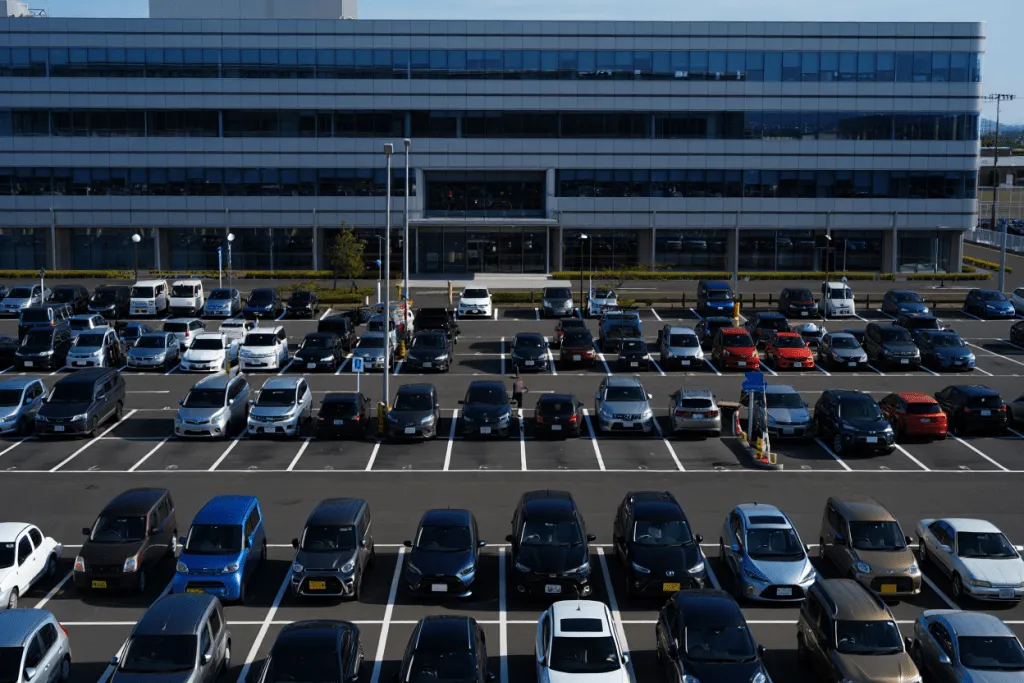
Real-time tracking allows organizations to:
- Identify actual usage patterns versus perceived shortages,
- Reduce the “safety buffer” of empty spaces needed,
- Support up to 20-30% more vehicles in the same physical space,
- Implement dynamic allocation based on actual demand.
Office parking occupancy data directly impacts the bottom line through:
- Reduced need for parking space expansion,
- Lower enforcement costs for unauthorized parking,
- Less pressure on admins when managing the car park, leading to a reducing of time spent on car park administration by up to 90%.
Perhaps the most valuable benefit comes from the improved commuter experience:
- Eliminated parking space hunting (estimated to waste 5-10 minutes per employee daily),
- Reduced commuting stress and arrival anxiety,
- Greater workplace satisfaction from reliable parking,
- Fewer late arrivals to meetings due to parking difficulties.
Smart parking contributes to sustainability goals by:
- Reducing emissions from circling vehicles searching for spaces,
- Enabling efficient EV charging station usage.
Reservation systems for the parking lot
As mentioned earlier, a parking spots booking system can help out with real-time occupancy tracking.
But, such tools can have certain features that can help admins improve the capacity and availability of the car park, making the whole experience more predictable.

Here are some the features:
- 1-click parking spot bookings from interactive car park maps.
- Check-ins and auto-release – when employees arrive and park on the previously booked spot, they can use the check-in feature, to confirm their arrival.
- Booking reminders.
- Hourly bookings. Such a feature is very useful when certain employees come to office for half a day or if they have meetings schedule outside the office. This way you make sure that the parking spot will be fully utilized throughout the day.
- Waiting lists – whenever the car park is full, employees can join waiting lists, and when a parking space becomes available gets free, it will be automatically assigned to the first employee in the queue.
- Booking priorities and booking windows – in order to avoid a first come first serve spots allocation, these features can assign certain priorities for certain groups of employees. To make things even more equal, a limit on the number of bookings per month could be applied.
- Spots sharing – often times companies assign certain parking spaces to some of their employees. Now, when these employees are working from home, are in vacation, or having sick days, such spots could lie empty. But with a sharing feature, they could be redistributed.
- Guest management.
- Integrations with other workplace apps like Slack, Teams, Google.
Such a parking spot booking system is Tidaro. We’ve made a longer list of such tools, here.
Sensor networks in office parking management
Sensor networks enable:
- Fluid space assignment that adapts to changing demand patterns
- Time-based sharing of spaces between different user groups
- Automated alerts for policy violations or maintenance needs
Organizations with sensor-equipped parking facilities report:
- 15-30% increase in effective capacity without physical expansion,
- Reduction in parking search time from 7-10 minutes to under 2 minutes,
- 25-40% decrease in complaints about parking availability,
- More accurate planning for future parking needs based on actual usage data.
When dealing with sensors installations, there are several cost considerations you should be aware of:
- Hardware costs: the cost to install ultrasonic parking space availability sensors can range from $300 to $500 per space, source here.
- Gateway infrastructure: $1,000-3,000 per gateway (covering 50-100 sensors).
- Installation labor costs.
- Software licensing: $2-5 per space monthly for cloud-based management.
- Maintenance: 5-10% of hardware cost annually.
Access control systems for car parks
Access control systems are a component of modern office parking management, regulating who can enter and exit parking facilities while collecting valuable data on usage patterns. These systems have evolved from simple mechanical gates to sophisticated technological solutions that integrate with broader parking management ecosystems.
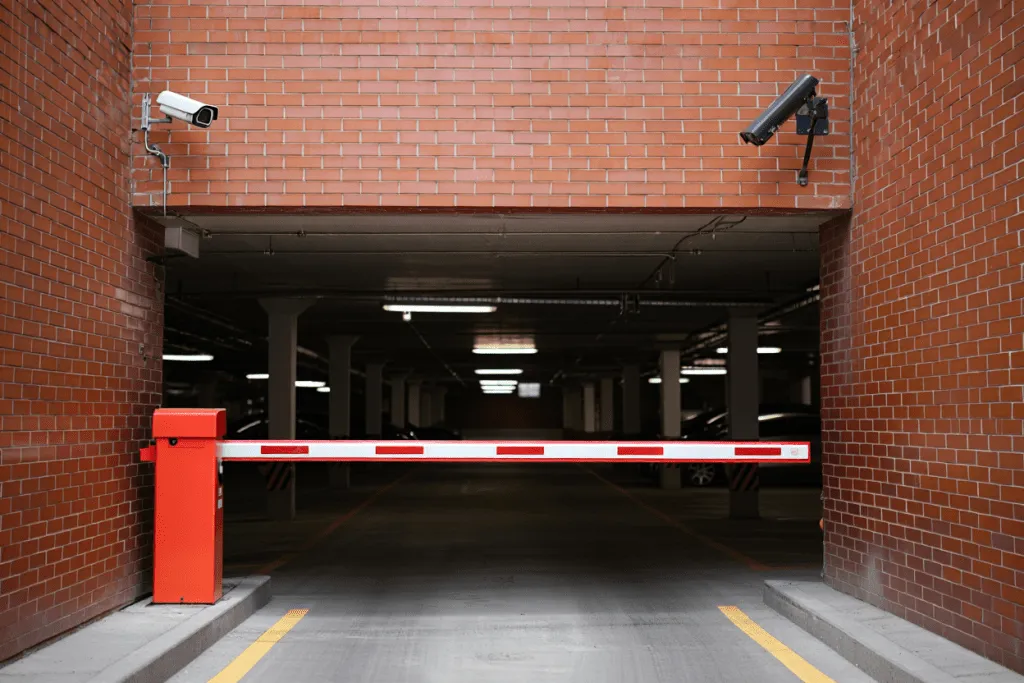
Traditional entry/exit validation through physical tickets are ticket-based systems:
- Entry process: Driver receives a time-stamped ticket from dispenser
- Exit process: Ticket is validated (and possibly paid for) before departure
- Technology components: Ticket dispensers, barcode/magnetic stripe readers, validation stations.
RFID/Transponder systems are technologies that use radio frequency identification for contactless access:
- Entry process: Vehicle-mounted tag is detected by reader, gate opens automatically
- Exit process: Same tag is detected upon departure
- Technology components: RFID readers, windshield-mounted tags, barrier gates
License Plate Recognition (LPR) are camera-based systems that identify vehicles by their registration plates:
- Entry process: Camera captures plate number, system verifies authorization
- Exit process: Second capture confirms identity before allowing exit
- Technology components: High-resolution cameras, OCR software, processing servers
Smartphone-based access using digital passes:
- Entry process: App displays QR code or transmits Bluetooth signal to reader
- Exit process: Similar verification upon departure
- Technology components: Mobile app, QR readers or Bluetooth receivers
Biometric systems are emerging technology using driver identification:
- Entry process: Facial recognition or fingerprint scanning verifies identity
- Exit process: Similar verification before departure
- Technology components: Biometric scanners, secure identity database
Access control serves as both the gatekeeper and data collection point for comprehensive parking management. They can prevent overcrowding and also can provide info on real-time availability using display. Such tech can support different access rules for various user groups.
Now, here are some of the benefits of using such systems in the parking lot:
- Restricting unauthorized vehicle access
- Creating accountability through usage records
- Protecting both vehicles and facility assets
- Eliminating double bookings, and reporting errors that occur when using from manual systems
- Reducing staffing requirements for manual control
- Enabling a 24/7 operation without personnel
- Providing automated reporting and analytics
- Minimizing human error in access decisions
- Reducing entry/exit wait times
- Providing consistent, predictable access
- Capturing detailed usage patterns
- Identifying peak demand periods
- Supporting data-driven capacity planning
- Enabling user behavior analysis
When it comes to implementing such technologies, here are the typical investment requirements:
- Entry/Exit stations: Starting at $300 (varies by technology)
- Barrier gates: Starting at $300 (varies by technology)
- LPR cameras: Starting at $500 per camera
- RFID readers: Prices can starts at $300
- RFID tags: prices can start at $0.5.
- Management Software: a base cost plus per-space licensing
And, yes, the cheaper products are manufactured in China. So, extra taxes might occur.
Visitor management – how to improve the guest experience

Visitor parking management represents a critical but often overlooked component of facility operations. Organizations face several distinct challenges when managing visitor parking:
Administrative burden: Managing validation, authorization, and tracking,
Unpredictable volume: Fluctuating numbers of visitors on different days,
Space allocation: Reserving the appropriate capacity without affecting the employees experience, if possible,
Wayfinding issues: Guests unfamiliar with facility layout and procedures.
Now, most of the tools presented above can help with visitor management.
What’s a bit different is the procedure. So, an online pre-registration would be helpful, as well as a series of automated emails with parking instructions and credentials. Depending on the tech being used in the car park, you can use QR or barcodes. Also, license plate pre-authorization could help streamline the visitor management processes. A detail that shouldn’t be overlooked is also the duration of the visit.
EV charging areas management
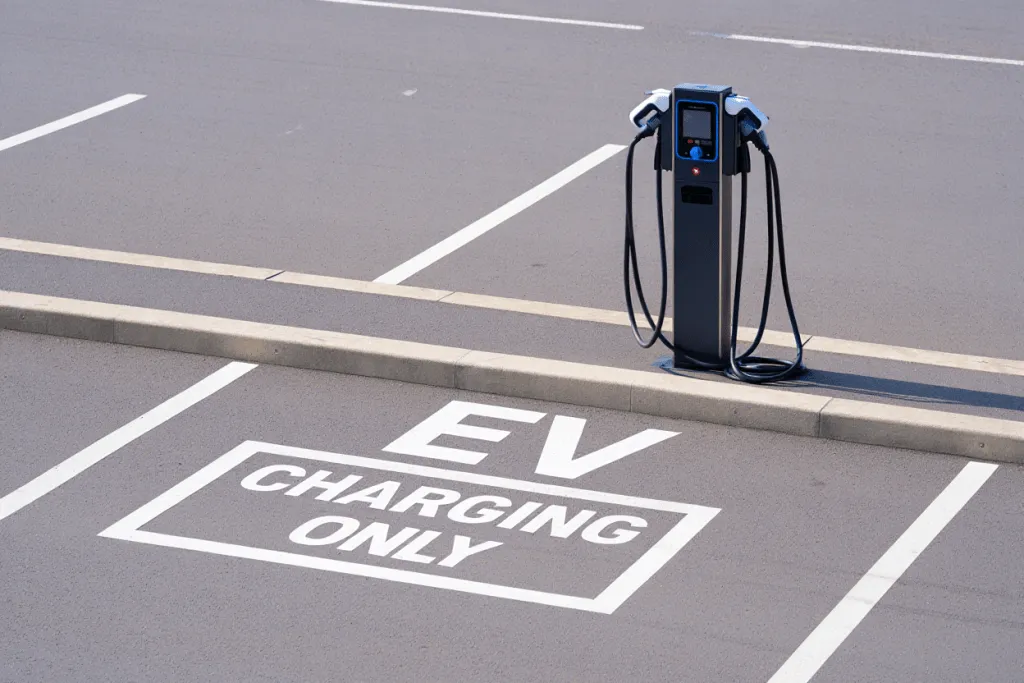
Adapting your company’s parking lot for electric vehicles may seem daunting, but it’s a worthwhile investment for the future. Here are some steps you can take to make the transition as smooth as possible:
- Assess the current situation: Start by examining your current parking lot and determining how many EV charging stations you need based on the number of employees, visitors, and clients who own electric vehicles.
- Determine the right type of charging station: There are several types of charging stations, so it’s important to choose the one that fits your company’s needs. Level 1 and Level 2 charging stations are suitable for overnight charging, while DC fast charging stations are ideal for quick top-ups.
- Plan the installation: Determine the location of the charging stations and whether you need to make any adjustments to the parking lot, such as adding new electrical circuits or rerouting power.
- Choose a reputable installer: Work with a professional installer who has experience in EV charging station installation to ensure that your stations are installed safely and efficiently.
- Promote the new charging stations: Once the charging stations are installed, promote them to your employees, visitors, and clients to encourage the use of electric vehicles and demonstrate your company’s commitment to sustainability. You can also use the Tidaro app for booking EV parking spots for your employees to ensure that they have a place to charge their vehicles while at work.
By taking these steps, you can ensure that your company’s parking lot is equipped to handle the growing number of electric vehicles on the road, while also supporting your sustainability goals and providing a valuable amenity to employees and visitors.
Next, choose the proper system for booking charging stations! We’ve discusses them in the previous subtopics.
Car sharing/Carpooling as a strategy to reduce the overall demand for parking spaces
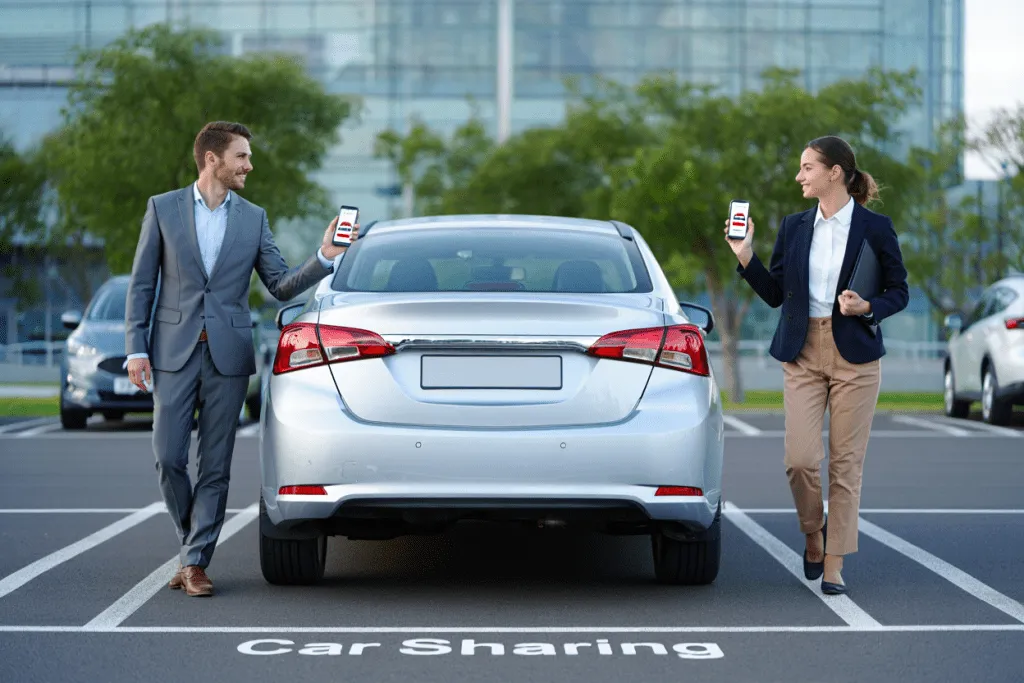
Implementing car sharing and carpooling programs represents one of the most effective strategies for organizations looking to reduce parking demand while promoting sustainability and improving employee satisfaction. When properly executed, these initiatives can significantly decrease the number of vehicles requiring parking spaces while offering numerous ancillary benefits.
The mathematics behind carpooling efficiency is compelling:
- A typical parking space serves 1 employee when used for single-occupancy vehicles,
- The same space serves 2-5 employees when used for carpooling vehicles,
- Studies show that effective carpooling programs can reduce parking demand by 15-25%.
There are two popular strategies for carpooling:
Traditional carpooling
Employees who live near each other or along similar routes share rides:
- Formal programs: Company-organized matching and incentives,
- Informal arrangements: Employee-initiated sharing based on relationships.
To make this more efficient, some companies might opt it for carpooling apps, or might just choose to design a ridesharing app for their employees. This is the case for the Continental Automotive Hungary Kft. plant. In the app, each employee can select a suitable rideshare driver or rideshare passenger analogous to their own commute.
The app offers numerous advantages for both the company and the employees. In addition to lowering CO2 emissions by reducing the amount of traffic generated, the concept has a positive impact on Continental’s sustainability goals while minimizing fuel consumption costs at the same time.
Vanpooling
Company-supported larger vehicles for group commuting:
- Organized routes: Planned pickup locations and schedules
- Higher capacity: 6-15 passengers per vehicle
Office parking management – the conclusions
Office parking management has evolved from a simple administrative function to a strategic opportunity for organizations to enhance employee experience, optimize resources, and support sustainability goals. The integration of technology—from basic reservation systems to sophisticated sensor networks and access control—allows facilities to operate more efficiently while collecting valuable data for continuous improvement.
The most successful approaches blend appropriate technology with thoughtful policies that address actual usage patterns rather than perceived needs. Whether implementing simple booking systems or comprehensive sensor networks, organizations should focus on delivering tangible benefits: reduced search time, guaranteed availability, and streamlined access.
Beyond operational efficiency, modern parking management contributes to broader objectives including environmental sustainability through reduced emissions, improved employee satisfaction through reduced commuting stress, and more efficient space utilization that can defer costly expansion projects.
As workplaces continue to evolve with hybrid models and changing commuting patterns, adaptable parking management systems will become increasingly valuable. By treating office parking management as a managed service rather than a static resource, organizations can transform what was once a daily frustration into a positive element of the workplace experience while making more efficient use of limited space.